A history of patches and layers
This Oklahoma City building had severe interior leaking beneath an aging roofing system. RedZone's project account describes multiple roofing systems layered over one another, along with repeated patching over the years. Water intrusion had become an ongoing concern for the building.
That pattern is common on older commercial buildings. Each new layer or patch addresses the problem in front of it, but the assembly underneath keeps getting harder to read.
For the people using the building, persistent interior leaks are more than a roofing problem. They can affect day-to-day operations, finishes and anything stored below. That is part of why the decision here focused on resolving the cause rather than managing the symptoms again.
Why stacked roofs make leaks hard to solve
When roofing systems are layered, water that gets through the top surface can travel between layers before it shows up inside. The leak inside may be some distance from where water entered. Trapped moisture can also stay in the old layers and insulation, and the condition of the deck underneath stays hidden.
This is general background on why layered roofs are hard to diagnose. It is also why, for this building, a patch-on-patch approach was not going to settle things.
A full commercial roof tear-off in Oklahoma City, down to the deck
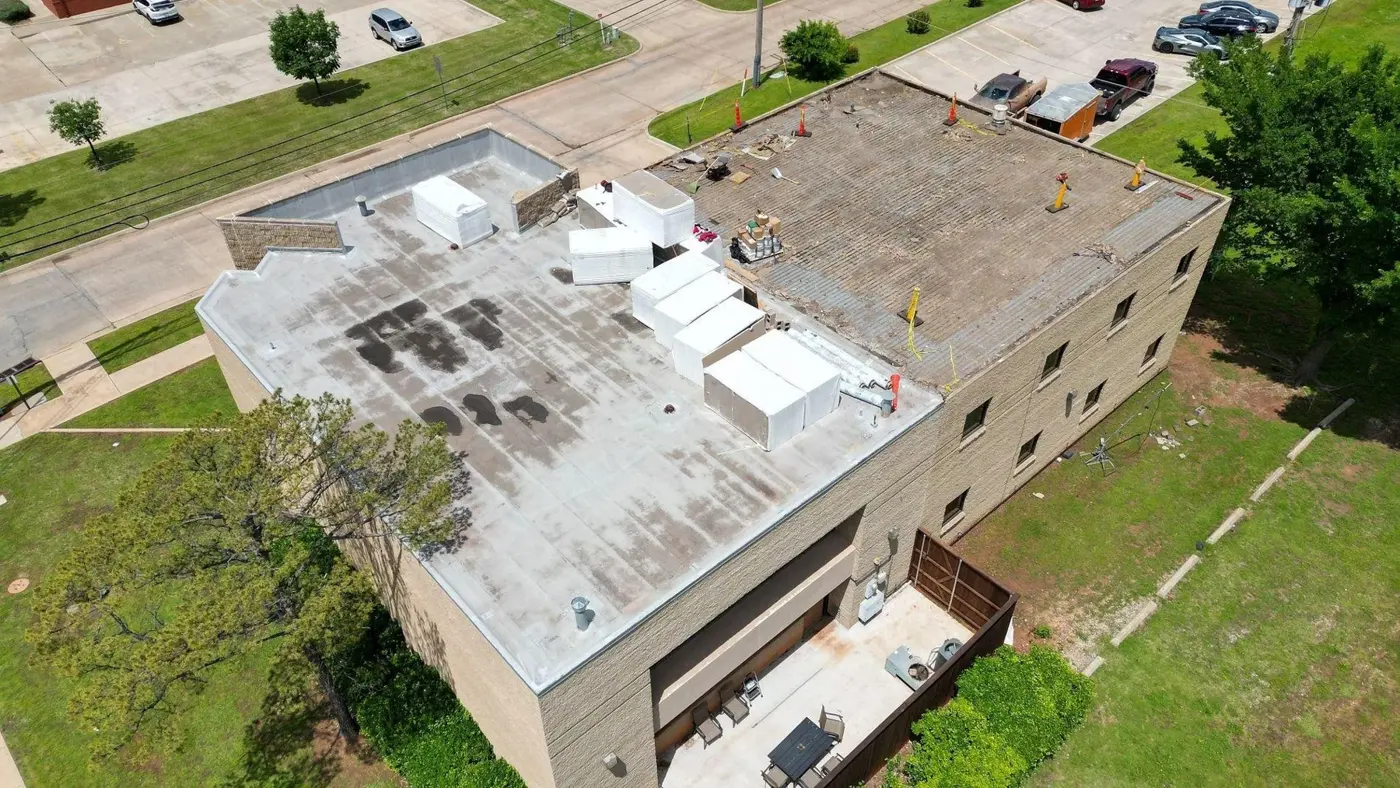
Instead of adding another layer over the existing systems, the work removed the failed roof layers down to the deck. A photo from the project shows the roof during tear-off, with part of the deck exposed and insulation boards staged nearby.
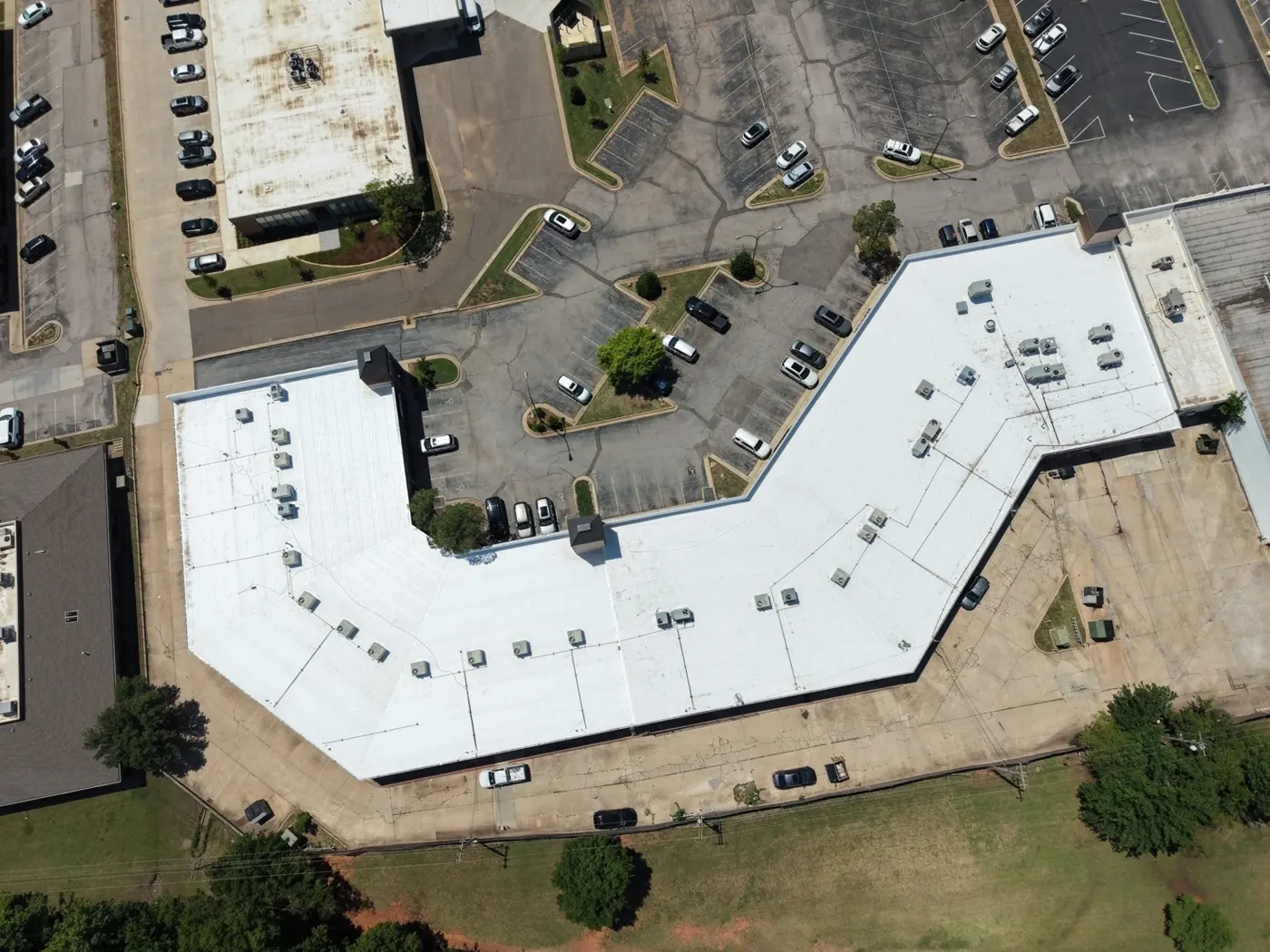
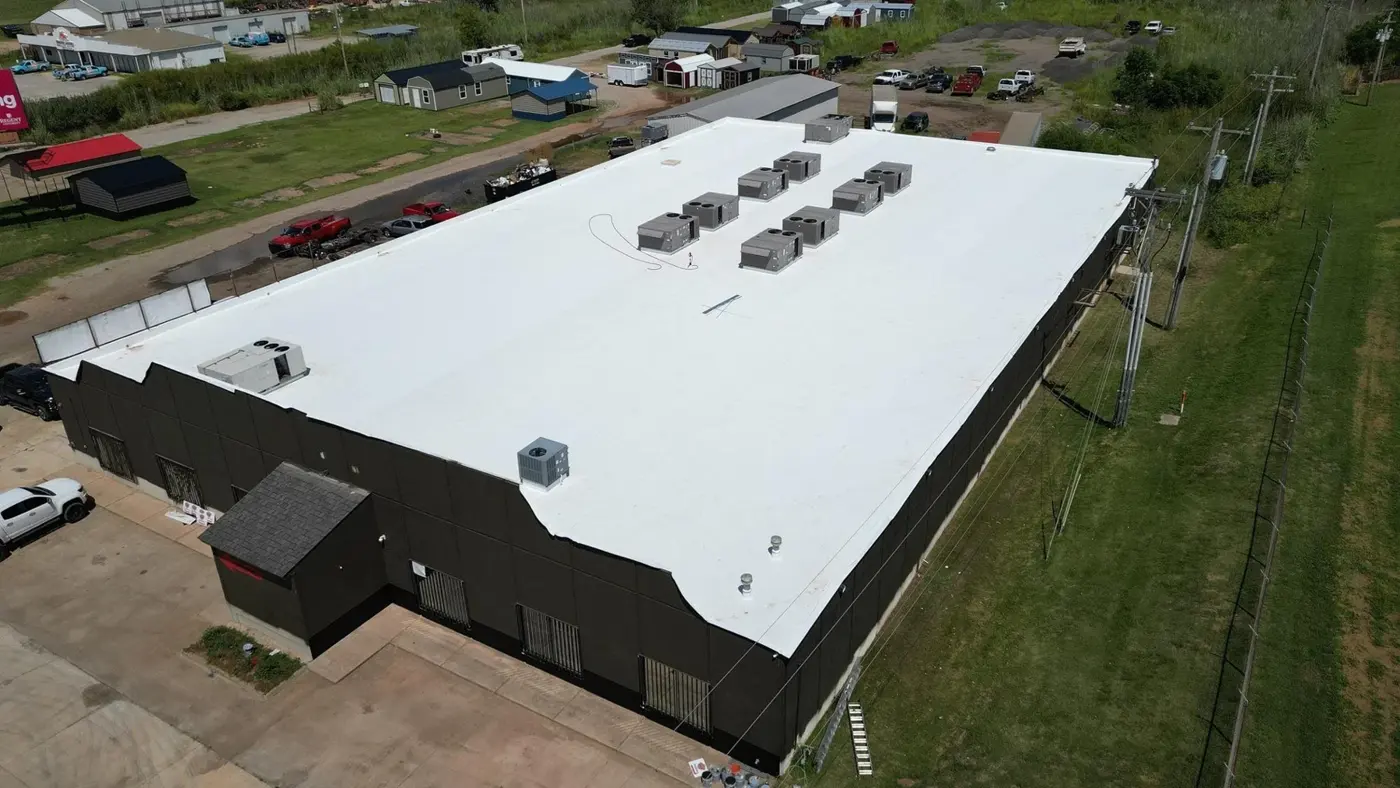
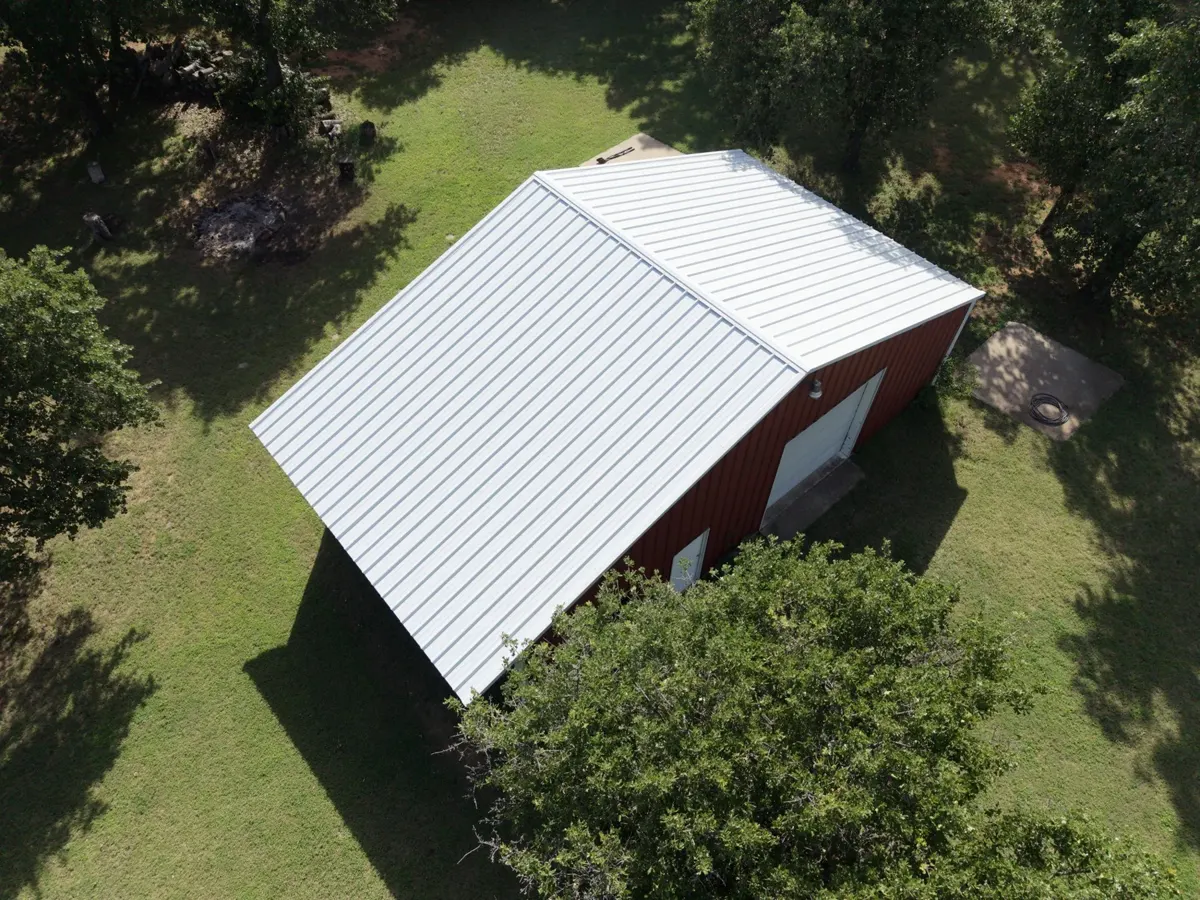
RedZone then installed a Carlisle fully adhered TPO roofing system. The finished photograph shows the new white roof surface across the building.
Removing everything down to the deck also means the new system starts from a known surface. Once the old layers are off, conditions at the deck can be seen and documented instead of guessed at, and the new insulation and membrane can be installed as one designed assembly.
Why the existing assembly matters
When leaks keep coming back, the history and condition of the roof assembly should be part of the inspection conversation. Ask how many layers are present, what the proposed tear-off includes, and how any conditions uncovered at the deck will be documented and addressed.
The right scope depends on the building's actual condition. Not every commercial roof needs a full tear-off, and RedZone will explain why a recommendation fits your building rather than defaulting to the largest option. A commercial inspection is the starting point.
Questions to ask before a commercial tear-off
- How many existing roof layers are there, and how was that determined?
- What does the tear-off include, and where does it stop?
- How will deck damage or wet insulation be documented and handled?
- What insulation, attachment method and membrane are proposed?
- How will work be staged around tenants, entrances and operations?
- What manufacturer and workmanship warranties apply to the new system?
Plan your commercial roof replacement
RedZone's commercial team coordinates access, staging, tenant communication and scheduling before construction begins, and reviews inspection findings, scope, material choices and warranties with you. Our project history includes fully adhered Carlisle and Versico TPO systems; see the Norman wind-damage TPO project for another example, and the materials page for system details.
The Norman office serves Oklahoma City, Midwest City, Edmond and the surrounding metro. Request a free inspection and bring your building's repair history and the locations of recurring leaks.