Documenting the commercial roof wind damage
This commercial roof in Norman, Oklahoma, sustained significant wind damage. According to RedZone's project account, the property owner was having difficulty obtaining full approval for the replacement.
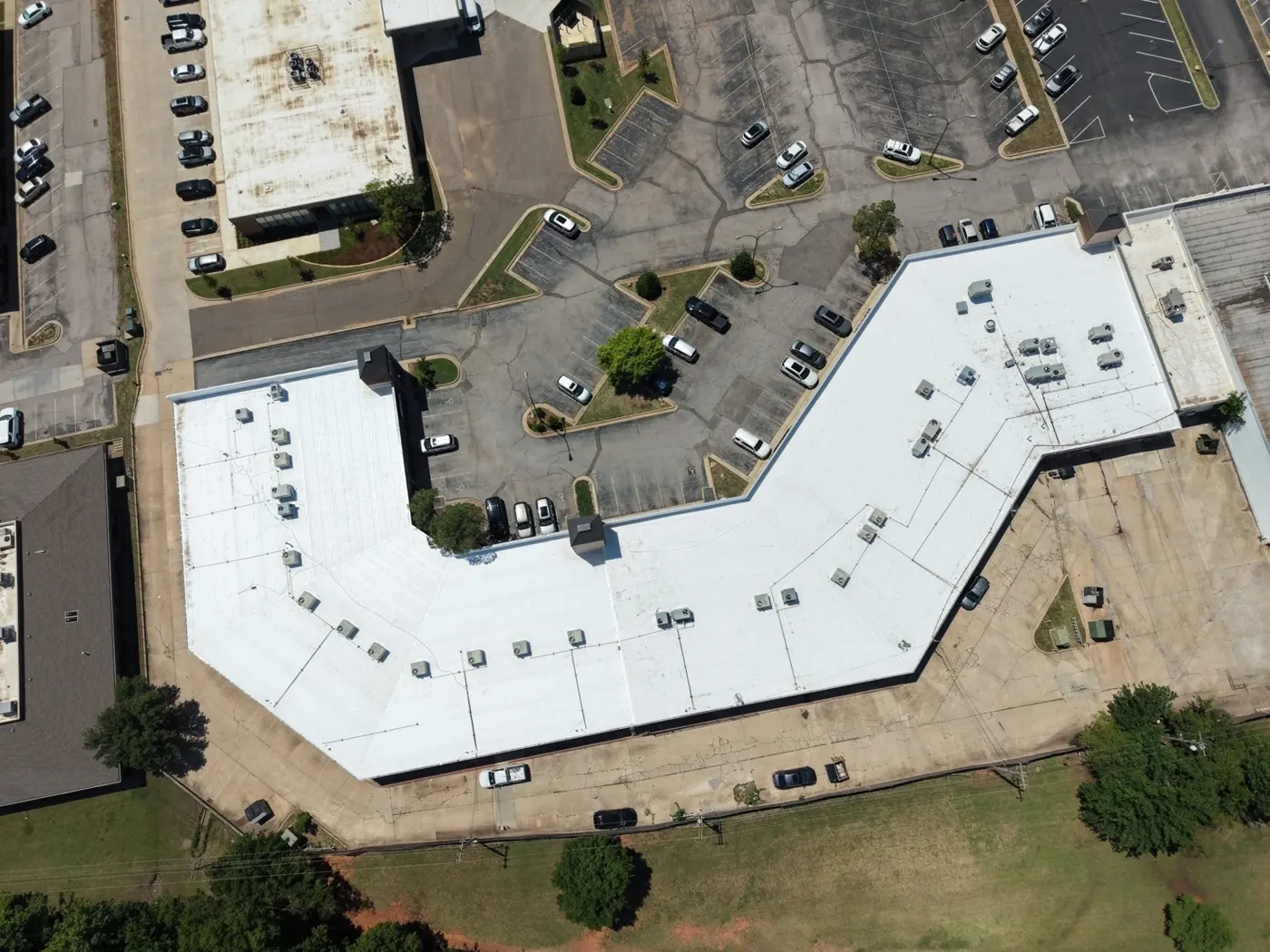
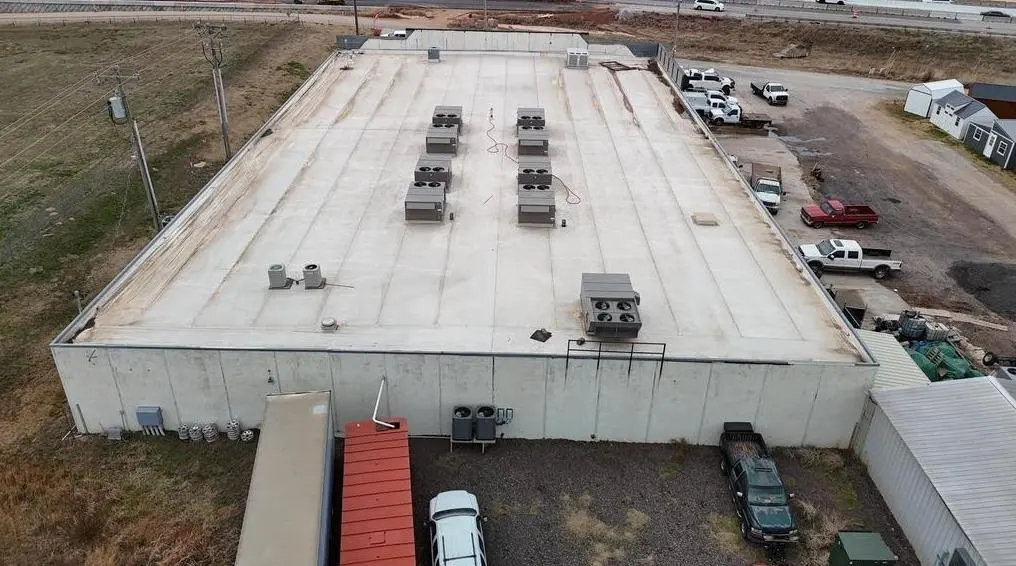
RedZone documented the observed issues on the roof and recommended an engineer's additional inspection and report. An earlier photo of the roof shows the low-slope surface with rooftop HVAC units and discoloration along the roof edges.
On a low-slope roof, wind damage is not always obvious from the ground. Wind can affect edges, corners, flashing and areas around rooftop equipment, and the effects may show up as lifted or loosened material rather than a dramatic tear. That is one reason careful, photo-supported documentation matters on a commercial roof.
An engineering review informed the next step
The project account records that the insurance carrier approved a full roof replacement after reviewing the engineer's findings.
That is the outcome of this particular project. Coverage and claim decisions depend on the individual policy and the insurer's own review. RedZone is a roofing contractor, not a public adjuster, and does not negotiate claims. What we can do is document damage with photos, provide construction documentation and be present when the adjuster inspects. When a situation calls for a specialist's evaluation, we can say so and explain why.
An engineer's report is not a shortcut to approval, and it is not the right step for every property. On this project, it gave the property owner and the insurer an additional, independent evaluation to review. Your insurer decides coverage under your policy.
Roof replacement and an exterior refresh
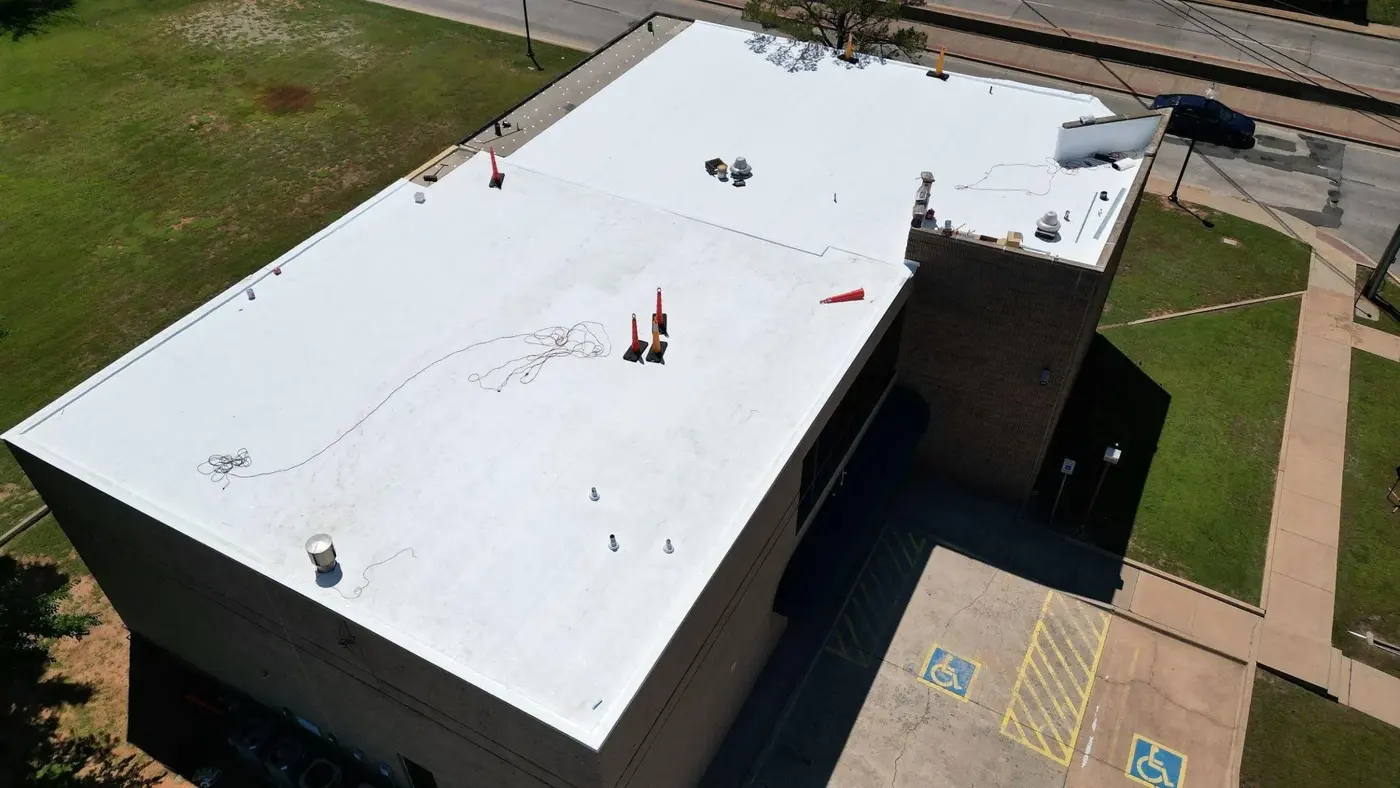
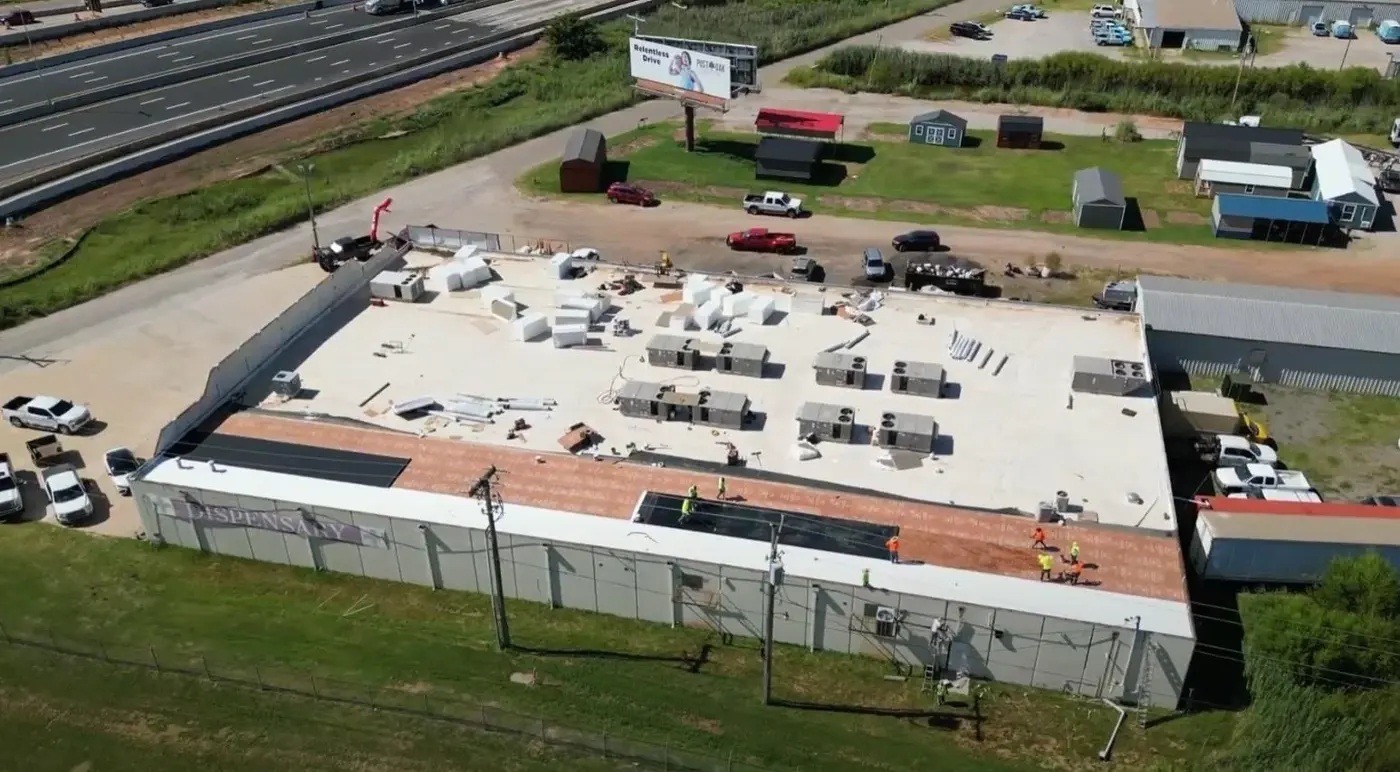
The documented replacement system was a fully adhered Versico TPO roof. The work also included repainting the building's exterior. The lead photograph shows the finished white roof and the refreshed, darker exterior.
Additional photos show the work in progress, with crew members on the low-slope roof and insulation boards staged on the roof.
Pairing the roof replacement with an exterior repaint meant the building came out of the project with a refreshed appearance as well as a new roof. For a commercial property, that can be a practical way to address the building's look while crews and equipment are already on site.
What fully adhered TPO means
TPO is a single-ply membrane used on many low-slope commercial roofs. In a fully adhered system, the membrane is bonded to the substrate below it rather than held only by fasteners at the seams. Like any low-slope system, it needs a plan for insulation, attachment, seams, penetrations and drainage.
RedZone's project history includes fully adhered systems from both Versico and Carlisle. Our materials page and our post on the Oklahoma City TPO tear-off cover more.
What to ask after a storm hits your commercial roof
- What photographs and observations support the reported damage?
- Are there areas the inspection could not access?
- Is a specialist's evaluation, such as an engineer's report, worth considering?
- What roofing system is proposed, and how is it attached?
- How will rooftop equipment, penetrations and edges be handled?
- Which manufacturer and workmanship warranty documents apply?
Start with the evidence and a clear scope
For a storm-affected commercial property, ask for photographs and a plain explanation of the observed conditions. Discuss whether specialist evaluation is needed, then review the proposed roofing system, the construction scope and the warranty documents that apply to your building.
RedZone's Norman office at 2320 N Interstate Drive handles commercial roofing and storm restoration across Norman, Moore, Oklahoma City and nearby communities. Request a free inspection to talk through your building.