Start with what happens when it rains
The easiest way to judge your gutters is to watch them work. Overflow, dripping joints and water collecting near the foundation are all good reasons to arrange a gutter review. Note where the water appears and whether it happens every time it rains or only in heavy storms.
A blockage, a damaged section or a drainage layout problem can look similar from the ground. Describe the symptoms before deciding the entire system needs replacement. Sometimes the fix is as simple as clearing a clogged downspout.
It is also worth noticing the season. Gutters that work in a light spring shower may overflow in a heavy Oklahoma downpour, and gutters that drain fine in summer can fill with ice in a Wisconsin winter. Tell the team when the problem shows up, because it helps separate a capacity issue from a clog or a damaged section.
Signs your gutters need attention
- Water spilling over the front edge during normal rain
- Drips or streaks at seams, corners and end caps
- Sagging runs or gutters pulling away from the fascia
- Downspouts that are separated, crushed or discharging next to the foundation
- Peeling paint, stains or rot on the fascia behind the gutter
- Standing water, erosion or washed-out mulch below the roof edge
- Visible dents or splits after hail
Look for visible changes from a safe position
From the ground, look for sagging runs, detached sections, separated downspouts and obvious damage. Do not climb onto the roof or lean a ladder against a gutter that looks loose or damaged. A ladder resting on a weak gutter can shift without warning.
Photos taken from the ground help the team understand where you noticed a problem. If you can, take one during rain to show where water is going.
When gutter repair makes sense
A limited problem may only need cleaning or a targeted repair: resealing a leaking seam, refastening a loose section, replacing a crushed downspout or adjusting the pitch of a run that holds water. These fixes can restore performance when the rest of the system is in good shape.
Ask what caused the issue and how the proposed work will address it. A gutter that sags because the fascia behind it is rotting needs more than new hangers.
Targeted repairs work best when the damage is in one place and the gutter material elsewhere is still solid. If a repair would mean patching joint after joint along the same run, or if sections are corroded, split or repeatedly pulling loose, the cost and effort of ongoing repairs can start to approach a replacement. Ask the team to compare both so you can see the trade-off.
When to replace gutters
Widespread deterioration, repeated leaks at many joints, a layout that does not handle the roof's runoff or damage along long runs can lead to a replacement discussion. Replacement is also worth considering when you are already replacing the roof or siding, since the gutters, drip edge and fascia all meet at the same roof edge.
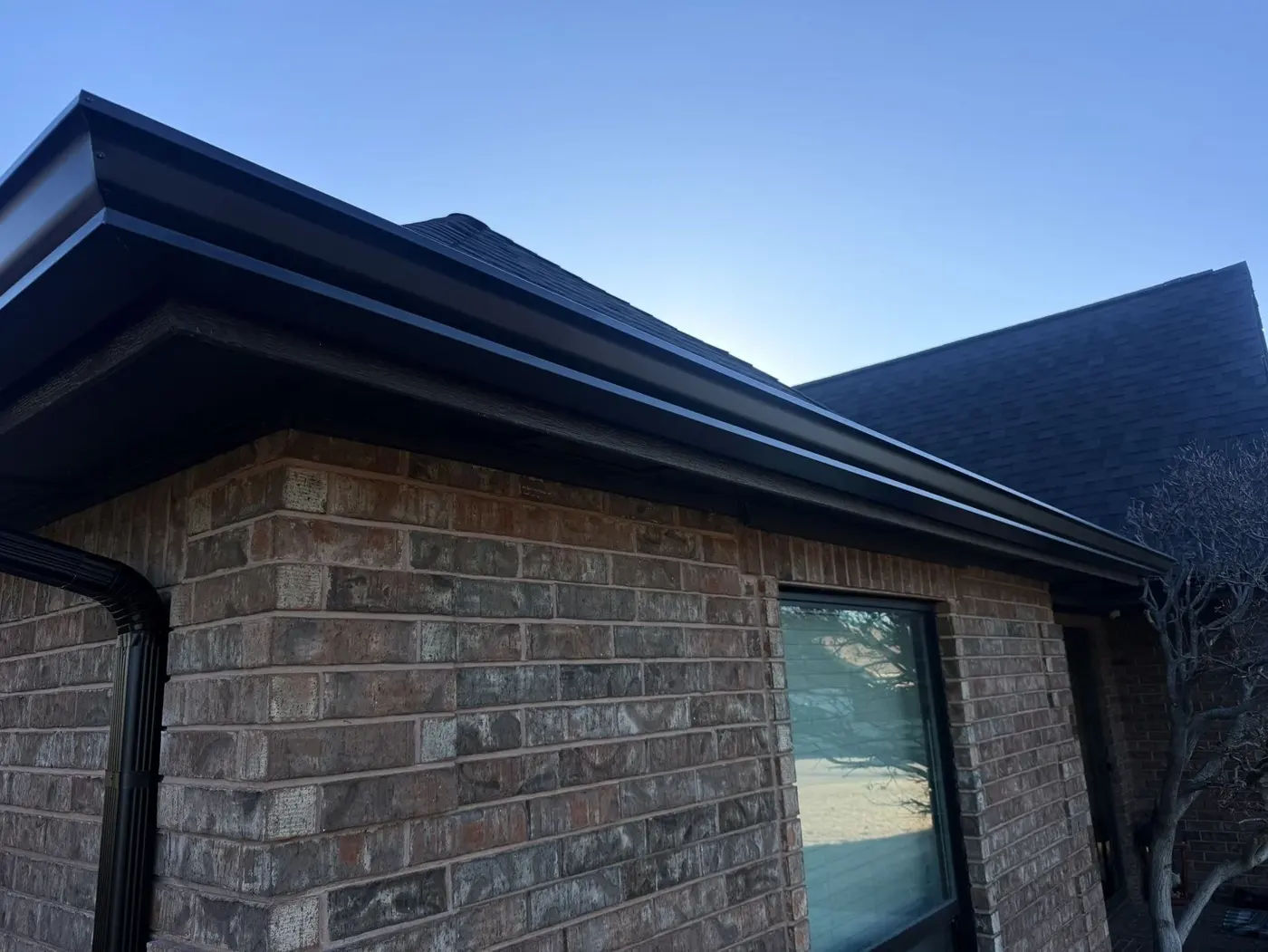
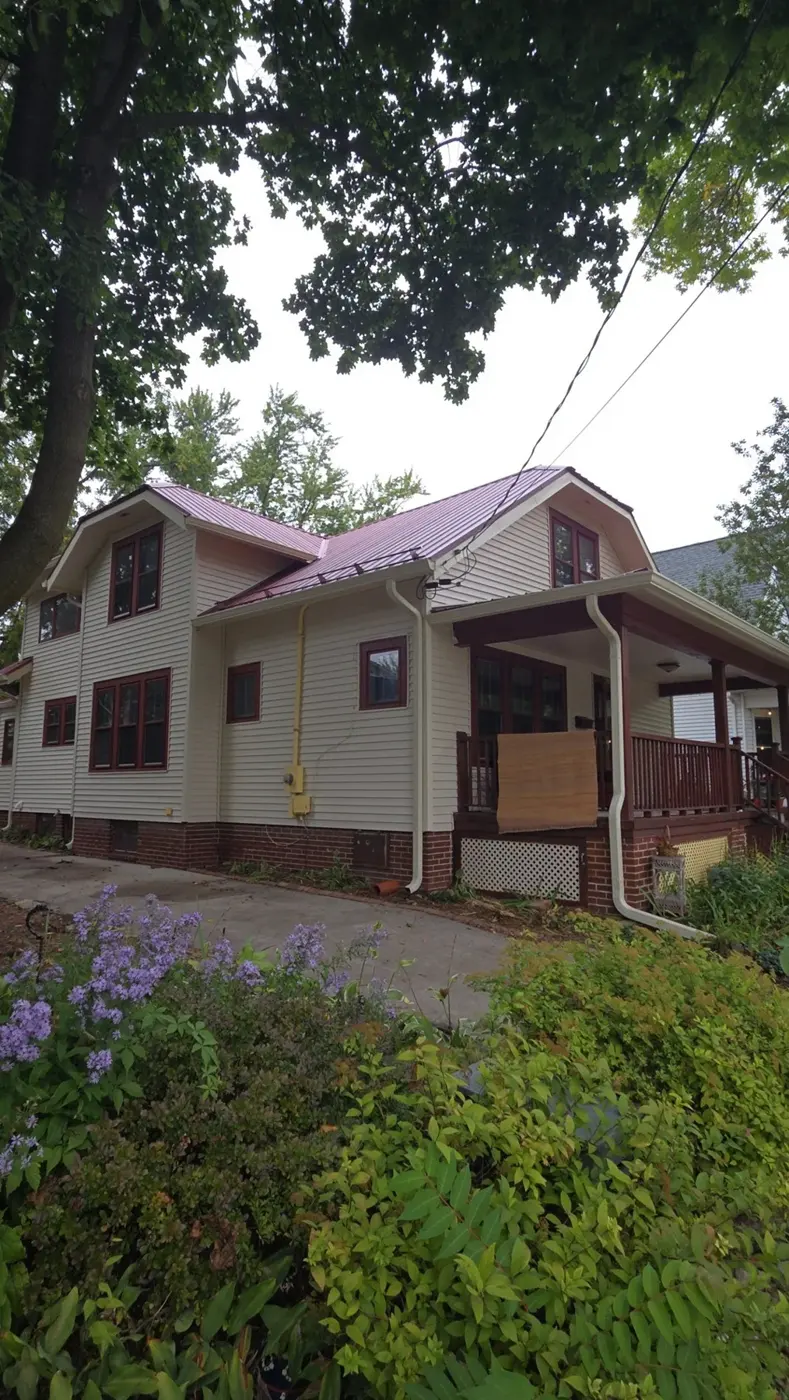
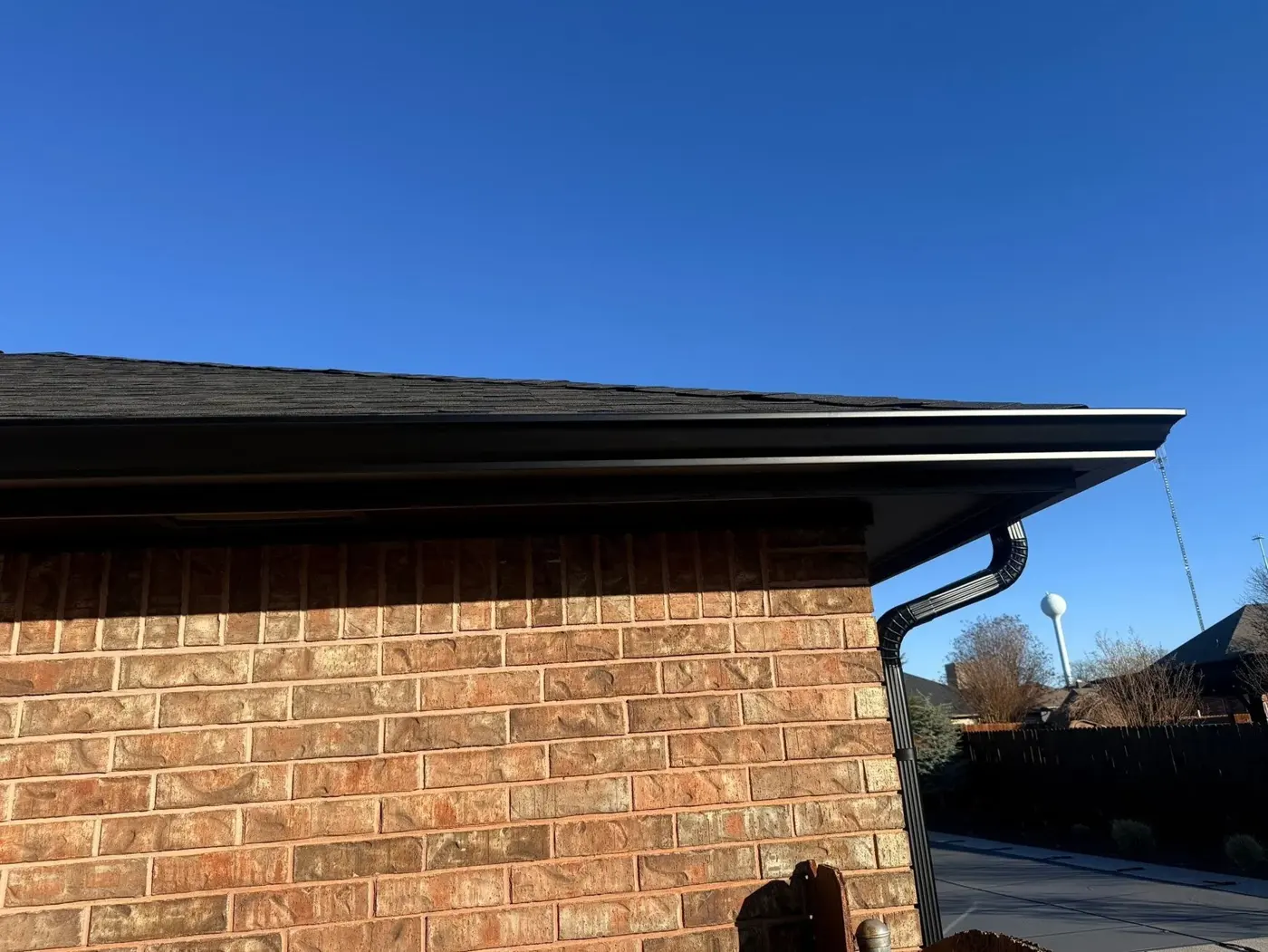
In the scope, confirm the gutter profile, finish color, downspout locations and intended discharge points. Our gallery includes close-ups of finished black seamless gutters on Oklahoma brick homes and white installations.
Look at what the gutters are attached to as well. Rotted fascia, damaged soffit or a roof edge without proper drip edge can all shorten the life of new gutters. A good scope addresses the board behind the gutter and the metal above it, not just the gutter itself. In storm-prone areas, replacement may also come up after hail dents or wind damage along long runs.
Consider the whole water route
New gutters should be planned alongside the roof edges and the surrounding property. The gutter collects runoff, while the downspouts and discharge points decide where that water ends up. Ask the team to explain the full route, from the roof to the ground, and what upkeep the selected system will need.
In Wisconsin, gutters also face snow load and ice along the eaves, so drainage and roof-edge details deserve extra attention. Our Wisconsin winter guide covers what to watch for. In Oklahoma, hail and wind are the usual culprits, and gutter damage is often part of a broader storm inspection.
Discharge points matter as much as the gutters. A downspout that empties against the foundation, onto a walkway that freezes in winter, or toward a neighbor's property can create new problems. Ask where each downspout will discharge, whether extensions are part of the plan and how the layout handles the roof sections that shed the most water, such as valleys and large upper slopes.