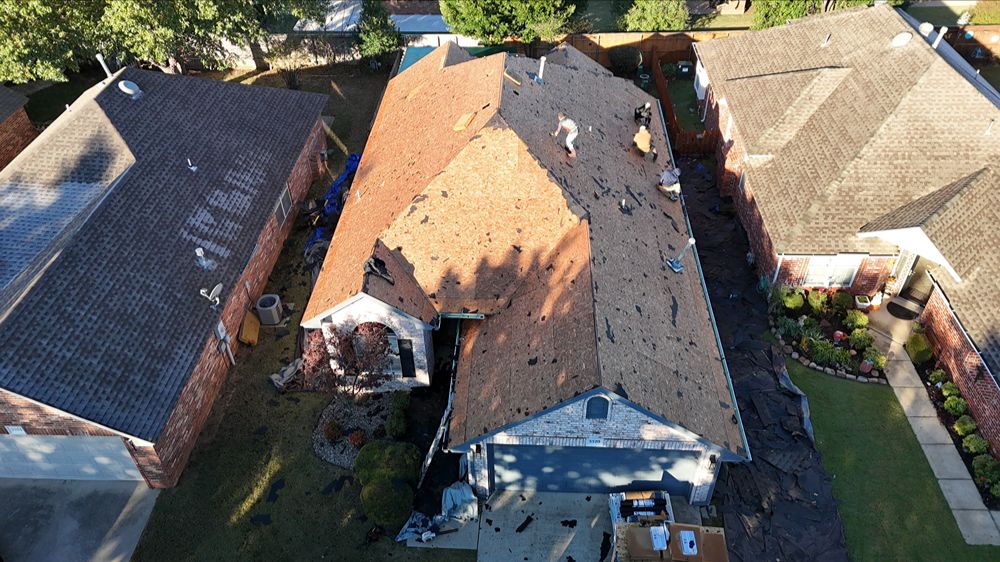
Oklahoma weather can change quickly, and severe storms can put significant stress on your roofing system. For homeowners and businesses in Norman, OK, strong winds, hail, heavy rain, and severe thunderstorms can cause anything from minor roofing damage to serious problems that require immediate attention.
Understanding how storms affect your roof can help you recognize damage early and take action before a small issue becomes a major repair. At RedZone Roofing, we help property owners identify roofing problems and find practical solutions for storm-related damage.
Common Types of Storm Damage to Roofs in Norman, OK
1. Hail Damage
Hail is one of the most common causes of storm-related roof damage. Even relatively small hailstones can affect roofing materials, while larger hail can cause more noticeable damage.
Hail can crack or break shingles, remove protective granules, and create dents or impact marks across the roofing surface. Some damage may not be immediately visible from the ground, which is why a professional inspection can be helpful after a significant hailstorm.
If hail has recently passed through Norman, checking your roof for signs of damage can help prevent problems from getting worse.
2. High Wind Damage
Strong Oklahoma winds can place considerable pressure on roofing systems. High winds may loosen, lift, or remove shingles, leaving portions of the roof exposed to moisture.
Wind can also damage flashing, vents, gutters, and other roofing components. Once roofing materials become loose or missing, rainwater may have an easier path into the underlying structure.
After a severe windstorm, look for missing or displaced shingles and other visible exterior damage. If you notice anything unusual, a professional roof inspection can help determine the extent of the problem.
3. Heavy Rain and Roof Leaks
Heavy rainfall can expose existing weaknesses in a roofing system. Damaged shingles, deteriorated flashing, clogged drainage systems, and previous storm damage can all contribute to leaks.
A roof leak may initially appear as a small water stain on a ceiling or wall. However, continued moisture can potentially damage insulation, drywall, wood, and other interior materials.
If you notice water entering your home or business after a storm, addressing the issue promptly can help minimize further damage.
Internal Link: Roof Repair → /roof-repair/
4. Damage to Flashing
Roof flashing helps direct water away from vulnerable areas around chimneys, vents, skylights, walls, and other roof penetrations.
Severe winds and storms can loosen or damage flashing, creating potential entry points for water. Because flashing problems are not always easy to see from the ground, they can sometimes go unnoticed until a leak develops.
A professional inspection can help identify damaged or deteriorated flashing and determine whether repair or replacement is necessary.
5. Damage to Gutters and Downspouts
Storm damage is not limited to the roof itself. Strong winds, falling branches, and heavy rainfall can damage gutters and downspouts or cause them to become clogged.
When water cannot drain properly away from your roof and property, it can contribute to water accumulation and drainage problems.
Keeping gutters and downspouts clear and properly connected can help support your roof’s overall drainage system.
6. Falling Branches and Debris
Severe storms can cause tree branches and other debris to fall onto a roof. Even a single large branch can puncture roofing materials or cause structural damage.
Smaller debris can also scratch or damage roofing surfaces and collect around drainage areas.
After a major storm, property owners should look for visible debris and avoid climbing onto the roof themselves. A professional can safely assess the roof and identify damage that may not be obvious.
Why Storm Damage Should Be Addressed Quickly
It can be tempting to ignore minor-looking roofing damage after a storm, especially when there is no obvious leak. However, some roofing problems can become more serious over time.
For example, a missing shingle can expose the underlying roofing system to rain and moisture. A small flashing problem can eventually contribute to a larger leak. Undetected hail damage can also affect the long-term performance of roofing materials.
Addressing storm damage early may help prevent additional property damage and more extensive repairs.
Signs Your Roof May Have Storm Damage
After a severe storm, watch for signs such as:
- Missing or damaged shingles
- Cracked or broken roofing materials
- Granules collecting in gutters
- Visible dents or impact marks
- Damaged flashing
- Loose or damaged gutters
- Water stains on ceilings or walls
- Leaks around roof penetrations
- Fallen branches or debris on the roof
- Shingles or roofing materials found around your property
Some damage may not be visible from the ground. If you suspect your roof has been affected by a storm, a professional inspection can provide a clearer picture of its condition.
What to Do After a Storm Damages Your Roof
Step 1: Check for Visible Damage From the Ground
After the storm has passed and conditions are safe, look around your property for missing shingles, debris, damaged gutters, or other visible signs of damage.
Avoid climbing onto the roof yourself. Roofing surfaces can become slippery or unstable after severe weather.
Step 2: Check Your Attic and Interior Spaces
Look for signs of moisture inside your home or business. Water stains, damp insulation, or dripping water may indicate a roofing problem.
If you discover active water intrusion, address it as soon as possible.
Step 3: Document the Damage
Take photos of visible exterior and interior damage. Documentation can be useful when discussing the problem with a roofing contractor and, when applicable, your insurance company.
Step 4: Schedule a Professional Inspection
A professional roofing inspection can help identify damage that may not be visible from the ground.
RedZone Roofing can assess your roof and explain the condition of your roofing system and potential repair or restoration options.
Step 5: Address Necessary Repairs
Once the damage has been evaluated, taking care of necessary repairs can help restore your roof’s ability to protect your property.
Internal Link: Storm Damage Restoration → /storm-damage/
Does Storm Damage Always Mean You Need a New Roof?
No. Storm damage does not automatically mean your entire roof needs to be replaced.
The appropriate solution depends on factors such as the type and extent of damage, the age and condition of the roof, and the roofing materials involved.
Some storm-related problems may be resolved through targeted repairs, while more extensive damage may require a complete roof replacement.
A professional inspection can help determine which option makes sense for your property.
Internal Link: Roof Replacement → /roof-replacement/
Protecting Your Roof Before the Next Storm
While severe weather cannot be prevented, regular roof maintenance can help keep your roofing system in better condition.
Consider having your roof inspected regularly, especially if it is older or has experienced previous storm damage. Keeping gutters clear, addressing minor repairs, and monitoring the condition of flashing and other roofing components can also help maintain your roof.
Being proactive can make it easier to identify potential problems before the next major storm arrives.
Why Choose RedZone Roofing for Storm Damage?
When severe weather affects your property, you need a roofing contractor who can help you understand what happened and what should happen next.
RedZone Roofing provides roofing services for property owners in Norman, OK, including storm damage restoration, roof repairs, inspections, and replacements.
Our team focuses on evaluating the condition of your roof and providing practical recommendations based on the damage.
Whether your property has experienced hail, wind, heavy rain, or debris damage, we can help you determine the next step.
Frequently Asked Questions
How can Oklahoma storms damage my roof?
Oklahoma storms can damage roofs through hail, high winds, heavy rain, falling branches, and flying debris. Damage may include cracked or missing shingles, damaged flashing, leaks, and other roofing problems.
Should I inspect my roof after a hailstorm?
Yes. A professional inspection after a significant hailstorm can help identify damage that may not be visible from the ground. Early detection can help prevent minor problems from becoming more serious.
Does wind damage always require roof replacement?
No. The extent of wind damage varies from one roof to another. Some roofs may only need repairs, while roofs with extensive damage may require replacement.
What should I do if my roof starts leaking after a storm?
If your roof begins leaking after a storm, try to protect the affected interior area from additional water damage and contact a roofing professional for an inspection and repair recommendation.
Can RedZone Roofing help with storm damage in Norman, OK?
Yes. RedZone Roofing provides storm damage restoration, roof repairs, inspections, and replacement services for residential and commercial properties in Norman, OK.
Get Your Free Storm Damage Estimate
Storm damage can become more serious when roofing problems are left unaddressed. If your Norman, OK property has recently experienced hail, high winds, heavy rain, or severe weather, RedZone Roofing can help assess your roof.
Contact our team to schedule a professional inspection and learn more about your roofing options.
Get your free estimate today.
Related Roofing Services
- Storm Damage Restoration
- Roof Repair
- Roof Replacement
- Roof Inspection
- Roof Maintenance
Related Service Areas
- Norman, OK
- Oklahoma City, OK
- Edmond, OK
- Yukon, OK
- Purcell, OK